Loading…
Rome destination N° 09
Castel Sant'Angelo
Originally built as a mausoleum for Emperor Hadrian, this towering cylindrical fortress has served as a papal fortress, prison, and now a museum. Connected to the Vatican by an ancient covered passageway.
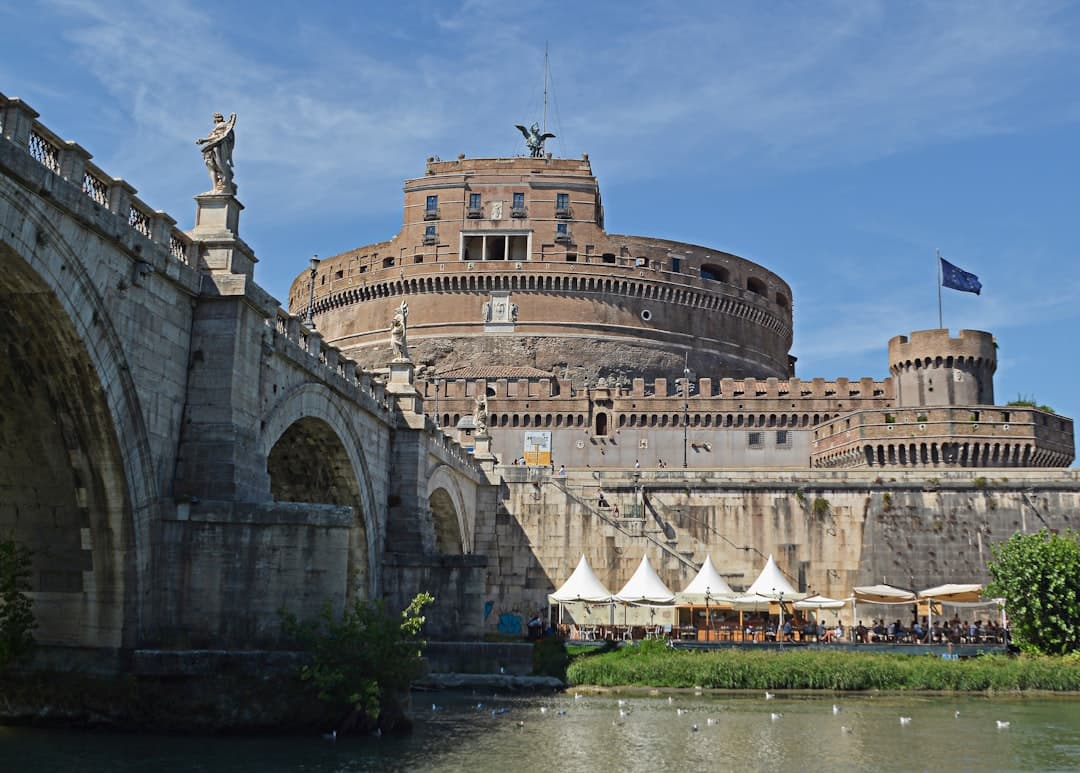
Castel Sant'Angelo has lived more lives than any other building in Rome. Emperor Hadrian began it around AD 123 as a colossal cylindrical mausoleum for himself and his successors; in the Middle Ages it became the popes' fortress; the Renaissance turned it into a luxurious papal apartment and a feared prison; today it is a national museum whose spiral ramp still climbs from the ancient burial chamber to a rooftop terrace with one of the best views over Rome and the Tiber.
Its name comes from a legend of the year 590: during a devastating plague, Pope Gregory the Great saw the Archangel Michael sheathing his sword atop the mausoleum, signalling the end of the epidemic. A bronze statue of the angel has crowned the castle ever since. The Passetto di Borgo, the elevated fortified corridor visible along Borgo Pio, connects the castle directly to the Vatican; Pope Clement VII fled along it during the Sack of Rome in 1527.
Inside, the museum layers two thousand years: Roman foundations, papal frescoed apartments, historic armouries and the cells that once held the goldsmith Benvenuto Cellini. Opera lovers know the terrace as the setting of the final act of Puccini's Tosca. In front of the castle, Ponte Sant'Angelo crosses the river lined with Bernini-designed angels, the most beautiful bridge approach in the city.
The castle stands midway between the Vatican and the historic centre: Lepanto and Ottaviano on Metro Line A are each about ten minutes away on foot. Visit in the late afternoon and time your exit for sunset on the terrace, then walk across Ponte Sant'Angelo as the bridge statues catch the evening light.
Questions about tickets, dress codes or timings? Our Rome FAQ answers the questions we hear most.
Visit with us
Experiences that include Castel Sant'Angelo


Nearby highlights
Keep wandering
Plan your Roman days
See Castel Sant'Angelo with a local host
Walk in with hosted entry, hear the stories, and go home with photographs worth keeping.